

Vietnam’s framework for hiring foreign workers has shifted significantly over the past 12 months. Decree 152/2020 has been replaced, the licensing process is now substantially digital, and a further round of reforms is currently under public consultation.
For foreign businesses operating in Vietnam, and for the foreign professionals they employ, the practical compliance picture in 2026 looks quite different from where it stood at the start of 2025.
This guide sets out the current rules, the recent and proposed changes, and what employers and foreign workers need to know to stay compliant.
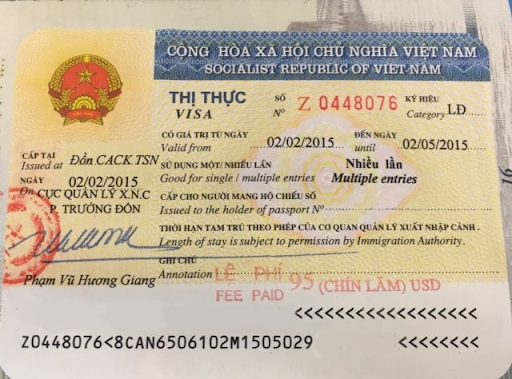
The 2026 Legal Framework, in Brief
Foreign nationals working in Vietnam are governed by two primary legal instruments:
- The Labor Code 2019, which sets out the core conditions foreign workers must meet
- Decree No. 219/2025/ND-CP, issued on August 7, 2025, replaced Decree 152/2020 and now governs work permits, exemptions, and procedural requirements
A further amendment is currently being drafted by the Ministry of Home Affairs. Public comments closed on June 9, 2026, and the final version is expected to be submitted to the Government in due course.
The proposed amendments don’t replace Decree 219 yet, but are expected to refine it further.
Who Needs a Vietnam Work Permit
Under Vietnamese law, foreign nationals must obtain a work permit before legally working in Vietnam, with some specific exemptions. According to the Vietnam Government Portal, foreign workers requiring a permit include those entering Vietnam to:
- Execute labor contracts with Vietnamese employers
- Perform intra-company transfers
- Execute business, commercial, finance, banking, insurance, science, technology, culture, sports, education, vocational training, or health contracts
- Provide services under contracts
- Work for foreign NGOs or international organizations licensed in Vietnam
- Work as managers, chief executive officers, experts, or technicians
- Participate in bid contracts and projects
Decree 219 also introduced an expanded exemption category under Article 7.15 for foreign workers confirmed by ministries or provincial People’s Committees to work in finance, science, technology, innovation, national digital transformation, or other locally prioritized socio-economic sectors.
Eligibility Conditions for Foreign Workers
Under Article 151.1 of the Labor Code 2019, foreign workers must:
- Be at least 18 years old and have full civil act capacity
- Hold technical, professional, or occupational qualifications and relevant experience
- Be in suitable health as required by the Ministry of Health
- Not be serving a sentence, awaiting criminal prosecution, or have an unrepealed criminal record under either Vietnamese or foreign law
- Hold a valid work permit unless exempt under Article 154 of the Labor Code
Specific qualification standards apply by role. Foreign experts generally need a bachelor’s degree plus at least 3 years of relevant work experience, or 5 years of experience with a practice certificate.
Technical workers need at least 1 year of training in their field plus 3 years of relevant work experience, or at least 5 years of relevant experience.
Executives and managers must provide an appointment decision and demonstrate at least 5 years of relevant experience.
Documents Required for a Work Permit Application
Standard documentation typically includes:
- The employer’s application form, per the Decree 219 prescribed format
- A health certificate from an authorized medical facility, issued within the previous 12 months
- A criminal record certificate issued within the previous 6 months
- Documents proving qualifications and experience (diplomas, certifications, employer references)
- Two recent color photos (4cm × 6cm)
- Confirmation of approval to hire a foreign worker, where required
- A notarized copy of the valid passport
- Purpose-specific documents (e.g., intra-company transfer letter, service contract, NGO sponsorship letter)
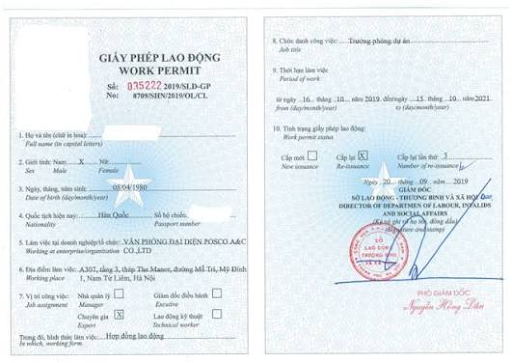
The draft amendments under consultation propose two significant changes here:
- Foreign-issued health certificates would be accepted, allowing employers to prepare dossiers before the worker arrives in Vietnam
- Documents already held in shared government databases (photos, passport data, criminal records) would no longer need to be resubmitted
These have not yet taken effect, but they are likely to do so once the new decree is approved.
The Application Process
The current process under Decree 219 runs in three stages:
- Step 1: Employer demand approval.
At least 30 days before the intended start date, the employer must submit a request to the relevant authority confirming the demand to hire a foreign worker. This can be done via Vietnam’s National Public Service Portal.
- Step 2: Work permit application.
Once approval is received, the formal work permit application must be submitted to the Public Administrative Service Center in the province where the foreign worker will work.
Under Decree 219, applications must be submitted between 10 and 60 days before the intended start date.
- Step 3: Wait for the Result.
The authority issues a result within 5 working days for approvals. Refusals must be explained in writing within 3 working days.
Work Permit Duration and Renewals
A Vietnam work permit is valid for up to 2 years, with the exact duration based on the shorter of:
- The labor contract term
- The duration of an intra-company transfer or service contract
- The duration specified in any sponsoring document
Under Decree 219, only one extension is permitted, for up to 2 additional years. After that, a new application is required.
Fees and Costs
Work permit application fees vary by province. According to the Vietnam Government Portal, examples include VND 400,000 in Hanoi and VND 600,000 in Ho Chi Minh City, with a maximum of VND 1,000,000. The employer is required to cover the work permit fee; it cannot be charged to the foreign worker.
In addition, foreign workers and their employers should budget for:
- Vietnam work visa (LĐ category) issuance fees, typically USD 25–155 depending on validity and number of entries
- Temporary Residence Card (TRC) for longer-term assignments: USD 145 for up to 2 years, USD 155 for 2–5 years, USD 165 for 5–10 years
- Health examinations, document translations, and consular legalization were required
The TRC is the document that allows foreign workers to reside legally in Vietnam for the duration of their employment without having to apply for repeated visas.
Penalties for Non-Compliance
Vietnam enforces work permit rules with heavy fines. Per the Vietnam Government Portal, employers who hire foreign workers without a valid work permit or exemption certificate face:
- VND 30M–45M for 1–10 workers in violation
- VND 45M–60M for 11–20 workers
- VND 60M–75M for 21 or more workers
Foreign workers who work without a valid permit or exemption certificate face:
- VND 15M–25M in fines, plus
- Expulsion from Vietnam
These penalties apply equally where permits or exemption certificates have expired.
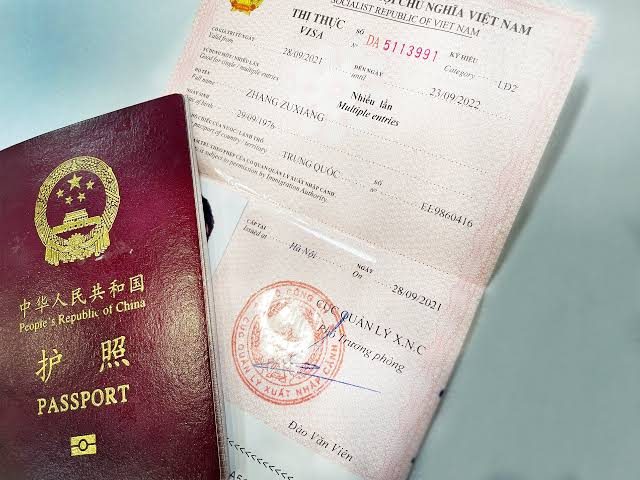
Vietnam Work Permit For Foreigners Updates in 2026
Beyond the proposed amendments to Decree 219, two trends matter for foreign businesses and workers in 2026:
- Increasing digitization. Submissions, criminal record checks, and database updates are moving online via the National Public Service Portal, reducing manual paperwork but raising the bar on data accuracy
- Decentralization to provincial authorities. Provincial-level People’s Committees are gaining expanded powers to issue and revoke permits, which may create some variation in how local rules are applied in practice
For most foreign businesses, the practical implication is that work permit processes are getting faster and more predictable, especially in priority sectors. But the documentation bar is also rising.
Hire Foreign Talent in Vietnam
Vietnam’s work permit framework rewards employers who get the paperwork right the first time. ERA helps foreign businesses sponsor, onboard, and manage their foreign hires in Vietnam, including work permit applications, payroll, statutory contributions, and personal income tax.
Explore ERA’s EOR services for the Vietnam market.

Ms. Tracy has worked in human resource consulting for over 15 years. A driven entrepreneur focused on business expansion and people development. She previously worked as Country Manager for an international Australia firm that specializes in global workforce management, as well as several key roles as Business Growth Director and Executive Search Director for both large local firms to effectively drive their business growth. A strong emphasis is placed on aligning organizational priorities/objectives with business needs. She has a large network of local business leaders and a thorough understanding of the local market.