

Vietnam is preparing to significantly ease the hiring of foreign professionals in high-priority sectors.
The National Ministry of Home Affairs is consulting on a draft decree to amend the country’s existing work permit framework, reducing paperwork, broadening exemptions, and, for the first time, accepting foreign-issued medical certificates.
The changes haven’t yet been enacted, but the direction is clear. For foreign businesses planning to bring expat hires into Vietnam, especially in technology, finance, and innovation, the proposed reforms are worth tracking closely.
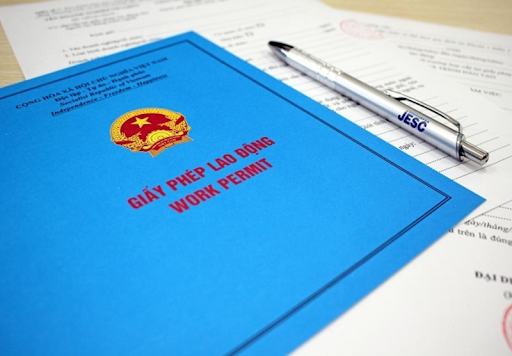
Read the full article for a practical breakdown.
Vietnam’s Decree 219 and What’s Being Updated
The proposed reforms build on the existing framework introduced under Decree No. 219/2025/ND-CP, issued on August 7, 2025. That decree already modernized Vietnam’s work permit system by introducing online processing through the National Public Service Portal, expanding exemptions for priority sectors, and tightening timelines:
- Applications must be submitted 10 to 60 days before the employee’s intended start date
- Approvals are issued within 5 working days
- Refusals must be explained in writing within 3 working days
- Extensions are limited to one, for up to two years
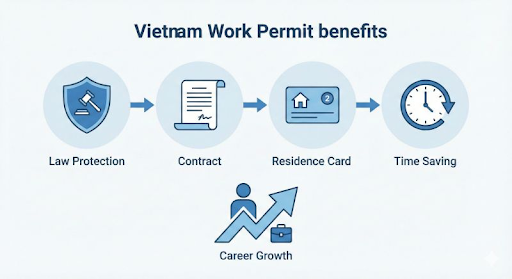
According to Vietnam News, Decree 219 has helped bring more than 162,000 foreign workers into Vietnam and sped up overall permit processing.
But implementation has also exposed friction points, particularly around medical certificate requirements and how “expert” is defined, that the ministry now wants to address.
Key Proposed Changes In Vietnam’s Work Permit Rules
As reported by Tuoi Tre News, the draft amendments would streamline administrative procedures, simplify work permit applications, improve transparency in labor management, and attract more highly skilled foreign professionals to strategic sectors such as AI, semiconductors, quantum computing, and education.
The draft is structured across five chapters and 37 articles. The Ministry of Home Affairs accepted public comments through June 9, 2026 before submitting the final version to the Government for approval.
The key proposed changes are below:
- Foreign Medical Certificates Would Be Accepted
Under current rules, only health certificates issued by medical facilities in Vietnam are accepted in work permit applications, forcing foreign workers to undergo redundant examinations after arrival.
The draft would allow health certificates from authorized foreign medical institutions to be used in applications. Employers could therefore prepare documents earlier, including before the worker enters Vietnam, shortening processing times.
- No More Resubmitting Documents Already in Government Databases
The draft eliminates the need to resubmit documents that are already available in shared government databases. This includes photographs, passport data, and criminal background records.
For employers managing multiple foreign hires, this materially reduces the time required for dossier preparation.
- Consular Legalization Largely Eliminated
Applicants would no longer need consular legalization or passport notarization. Other foreign-issued documents in application files would still require legalization, except where exempted under international treaties, reciprocal arrangements, or other legal provisions.
- Integrated Criminal Record Procedure
Employers would be allowed to submit work permit applications together with criminal record certificate applications on behalf of foreign workers via the National Public Service Portal. Results would be issued electronically, reducing intermediate steps.
This is a meaningful simplification. Currently, criminal record procedures are often handled separately, adding lead time to the onboarding process.
- Removal of Experience Requirements for Priority Sector Specialists
The current framework defines “expert” largely through years of work experience, a measure that ministry drafters acknowledge fails to capture talent in fast-moving fields like AI and semiconductors.
The draft would remove experience requirements for specialists working in:
- Finance
- Science and technology
- Innovation
- National digital transformation
It also sets out conditions for experts involved in strategic technologies and strategic technology products, as well as in certain specialized fields such as culture, arts, sports, education, and training.

- Broader Education Exemptions
The draft clarifies categories of foreigners exempt from work permit requirements in the education sector, including:
- Individuals participating in teaching, research, or the transfer of international education programs
- Those involved in educational cooperation programs and projects
- Holders of a master’s degree or higher in STEM, digital transformation, finance, economics, and business administration who teach or conduct research at educational institutions
- Those with advanced academic titles involved in teaching, research, or academic exchanges
The draft also clarifies several other categories, including intra-company transfers, commercial presence, volunteers, contractual service providers, and foreigners entering Vietnam for short-term employment.
- Provincial Authorities Gain Expanded Powers
Provincial-level People’s Committees would receive expanded powers to issue and revoke work permits, with the ability to delegate those functions based on local conditions.
In parallel, employers and licensing agencies would be required to keep employee data current to feed a national workforce database the draft describes as “accurate, complete, clean, live, unified and shared.”
Run Payroll for Foreign Hires in Vietnam
Once a foreign worker has been onboarded, the next compliance question is making sure they’re paid correctly under Vietnamese tax, insurance, and labor rules.
ERA’s Global Payroll services support employers managing payroll, statutory contributions, and personal income tax for foreign hires in Vietnam.
Explore ERA’s Global Payroll services.

Ms. Tracy has worked in human resource consulting for over 15 years. A driven entrepreneur focused on business expansion and people development. She previously worked as Country Manager for an international Australia firm that specializes in global workforce management, as well as several key roles as Business Growth Director and Executive Search Director for both large local firms to effectively drive their business growth. A strong emphasis is placed on aligning organizational priorities/objectives with business needs. She has a large network of local business leaders and a thorough understanding of the local market.